Reflection and Choice: What Hamilton Asked of Us on America’s 250th Birthday
A Love Letter to a Still Unfinished Nation

Today, the United States reaches a quarter of a millennium. Two hundred fifty years ago, a handful of restless colonies risked everything on a radical hope: that ordinary people, disagreeing out loud, could steer their own future by reason and consent rather than by fear and violence.
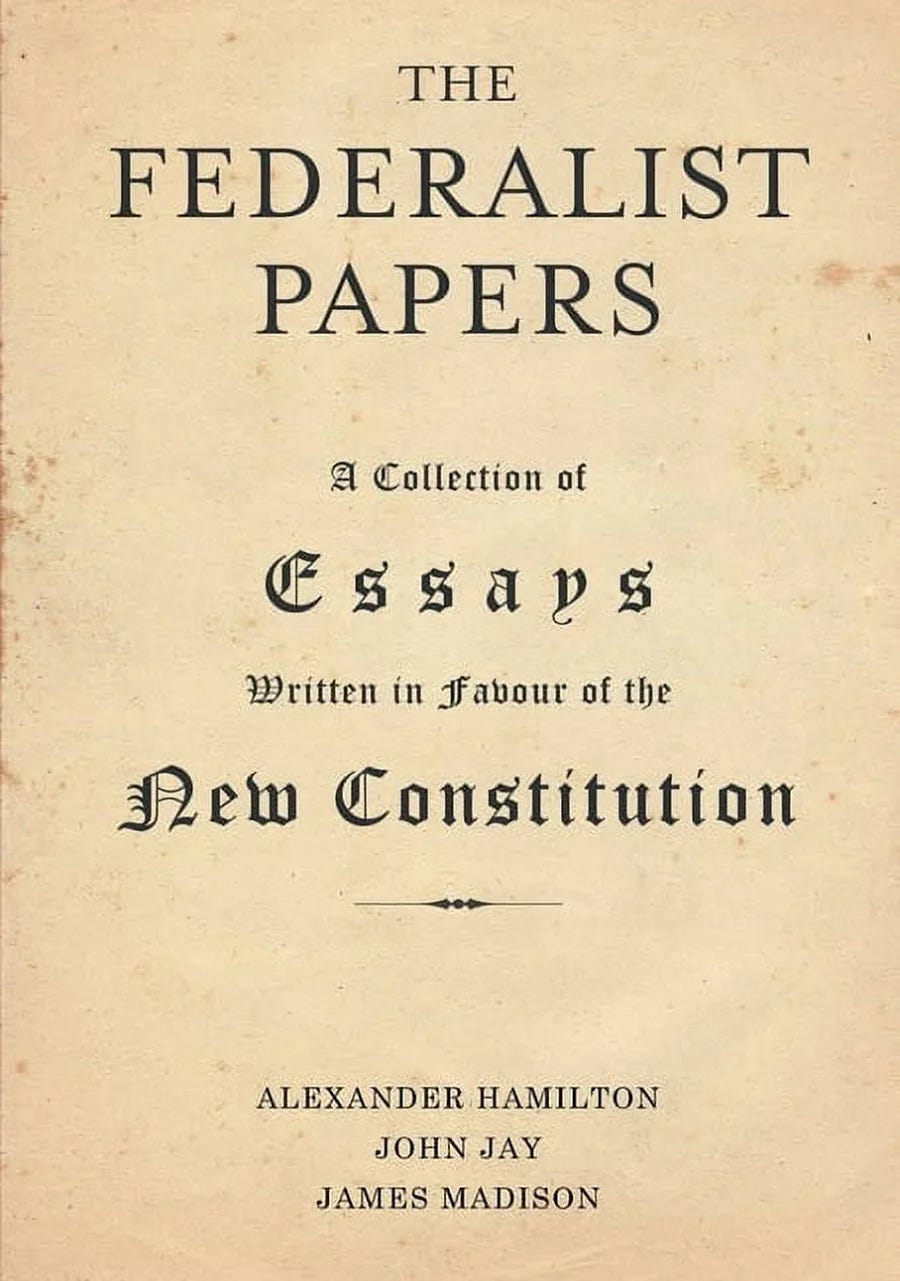
Alexander Hamilton felt the full weight of that hope when he opened The Federalist Papers in 1787. He told his readers that history had handed them a question no one had ever answered at scale: Can societies build “good government from reflection and choice,” or must they forever yield to “accident and force”?
I spend my life studying what happens when force replaces reflection. In families, neighborhoods, and nations, violence looks quick and decisive until the moment it shatters everything it touches. Reason, by contrast, walks with a cane. It pauses, questions, invites correction, and therefore saves lives.
Hamilton and the other founders had just escaped an empire that prized swift coercion. They responded by slowing power down on purpose. Three branches that restrain one another. A Congress split in two, each half able to stall the other. Amendments that demand supermajorities and years of debate. Courts that must answer to evidence, not adrenaline.
To modern eyes, that machinery can feel like paralysis. From a violence-prevention lens, the friction is a safeguard. Delay creates the breathing room in which tempers cool, facts surface, coalitions form, and compromises appear. In therapy, we call that interval the pause. In civics, we call it checks and balances.
The system has never been flawless, and many of its deepest corrections arrived heartbreakingly late. Indigenous nations, enslaved people, women, immigrants, and countless others waited generations for promises to turn into law. Yet the very ability to admit wrong and rewrite rules is proof that reflection and choice still beat inside the national experiment. Under raw force, injustice breeds only more force. Under a deliberative republic, injustice can spark reform. Slowly, imperfectly, and on purpose.
On this birthday, I hear Hamilton’s challenge more clearly than ever.
Resist the seduction of speed. The loudest voice is not the strongest evidence. Process, though tedious, protects us from our worst impulses.
Guard the places where reflection happens: independent courts, free universities, honest journalism, competitive elections. Each of these institutions lengthens the fuse between grievance and action.
Teach the skill set of self-government. Emotional regulation, critical thinking, mutual respect, and data literacy are not academic luxuries. They are the civic armor that lets ballots outrank bullets.
Celebrate the victories that never make headlines. Every crisis defused, every law improved before harm occurs, is a quiet triumph of reflection over force.

Two and a half centuries is an astonishing run for any human project, let alone one built on votes instead of bayonets. We have survived civil war, depression, pandemics, and technological upheaval not because we are immune to accident and force but because our framework still buys us the resource tyrannies cannot bear: time to think.
So here is my birthday wish for America. May we keep faith with Hamilton’s wager. May we keep arguing, keep revising, keep listening, and keep choosing. May we remain impatient enough to see wrong and patient enough to correct it without violence.
Happy 250th, America. The experiment continues, and that is reason to hope.
©The Liefde Organization; 04-July-2026 (Barbara Jo Ladd, PsyD). All Rights Reserved.