

The World We Wanted
Why Our Generation Feels Betrayed—and Why We’re Not Finished Yet

We were promised a world without walls.
We were told history was bending toward peace. That if we worked hard, stayed kind, and got our degrees, the future would open like a door that had been waiting for us all along.
Instead, we inherited war. Debt. Division. A glowing rectangle that delivers catastrophe before we’ve even had our coffee.
And somewhere between 9/11 and now, between the mall and the algorithm, between hope and exhaustion, we began to wonder:
Was it all a lie?

The desert wind is beating against my window today. I live in Arizona now, where the heat doesn’t just warm you—it takes, stealing moisture, stealing breath, making you aware that survival here is a negotiation with something bigger than yourself. I’m forty-two, and I’m sitting outside, allowing the sun to beat against my pale-white face with a laptop burning my thighs, trying to find the words to tell you that we are not finished yet.
But first, I need you to feel what I feel.
I need you to remember the sting of a Wisconsin winter—the way the air would freeze your nostrils on the long, cold walk to the school those chilly mornings, the world so quiet you could hear the snow settling. I need you to remember believing that the future was a promise written in neon, not a threat whispered through a screen. I need you to remember Europe—the cobblestones I walked years later, the cafes where I learned that “history“ wasn’t just a textbook but a weight you could feel pressing against the present.
If you were born between 1977 and 1985, you are standing at a precipice right now, and it may feel as if the wind is trying to push you off.
You feel it, don’t you? The hopelessness.
It’s not just you. It’s in the air we breathe, thick as the smoke from California wildfires that turned our Arizona sunsets blood-red last summer. It’s in the way we flinch when we check our phones. It’s in the silence at dinner tables where we used to argue about movies but now argue about whether democracy will survive the next election cycle.
We were the children of “Morning in America.“ We were supposed to be the capstone generation—the ones who inherited the end of the Cold War and built the global village. Instead, we are middle-aged in a world that feels like it’s coming apart at the seams, and we are terrified that we are failing our children, failing our parents, failing the 1980s version of ourselves who believed in Winnebagos and world peace.
But I am here to tell you—scream at you, if necessary—that the light is not gone. It has just moved underground, where the roots are.
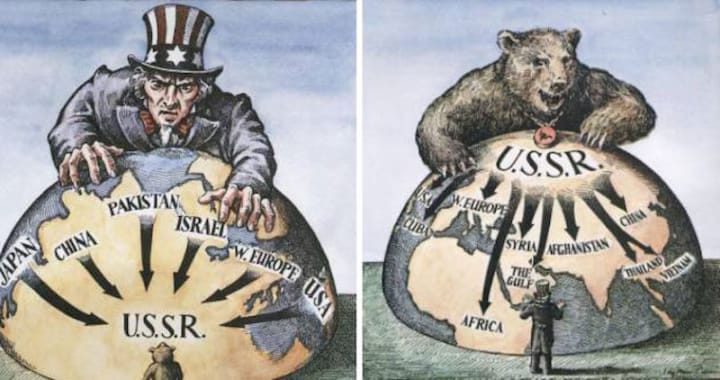
The World We Were Promised
War Was Supposed to Be Over
You remember the drills, don’t you? Not the active shooter drills our children endure now, but the nuclear ones. The cold linoleum of a Wisconsin classroom against your cheek as you curled beneath your desk, hands laced behind your neck, trying not to giggle because the teacher said this was serious but your body knew it was absurd—how does a desk stop a nuclear bomb? We were six years old, and we knew the word “Russia,” and we had seen the mushroom clouds on The Day After, and then, miracle of miracles, the Wall fell.
1989. I was six. I watched people dance on concrete on a television in my parents’ living room, and my mother—who had lived through Kennedy’s death and Vietnam—cried tears I didn’t understand. But I felt the shift. The 1990s bloomed like a flower in a greenhouse. History was over, they told us. Fukuyama said so. We were the End of History kids. We shopped at Benetton because we were the United Colors. We watched Sesame Street and learned that cooperation was the only way.
We believed—oh, how we believed—that our parents’ wars were finished.
Then the second plane hit.
I was eighteen, sitting in a math class at UW–Whitewater, when everything changed. One minute I was half-focused on equations, the next minute the National Guard were standing in the doorway, calmly but firmly escorting us out and sending us back to our dorms. When we were finally allowed to return to class, nearly two-thirds of the faces I knew were gone—about 65% of my university called up, uniforms replacing backpacks almost overnight. I watched Americans become soldiers in real time, my classmates disappearing into wars most of us barely understood. Years later, in my practice, those same men and women—or people just like them—sat across from me, carrying invisible shrapnel: moral injury, sleeplessness, panic wrapped in silence. They were promised stability and a “peace dividend,” and instead came home trying to stitch their souls back together with whiskey, workaholism, and isolation, proof that the psychological cost of war never really ends when the fighting does.
We were the generation promised the end of war. We became the generation that fought the longest war in American history. The betrayal is cellular.
We Would Do Better
Remember the mall? The 1990s mall with its fountain and its promise? We were told—by our Boomer parents who had built suburban America into a fortress of middle-class comfort—that we would be the first generation to go to college without exception, to own homes by twenty-five, to have “careers“ instead of jobs.
The 2008 crash didn’t just take our 401(k)s. It took our narrative. I watched friends with Master’s degrees serving coffee. I watched the foreclosure signs bloom like fungi across the subdivisions where we grew up. Today, if you’re under forty, you are statistically poorer than your parents were at your age. The shame of that—the quiet, gnawing feeling that we are the first Americans to slide backward—eats at us. It walks into my clinic disguised as addiction, as domestic violence, as the sudden, shocking rage of people who were promised stability and given gig economy apps instead.
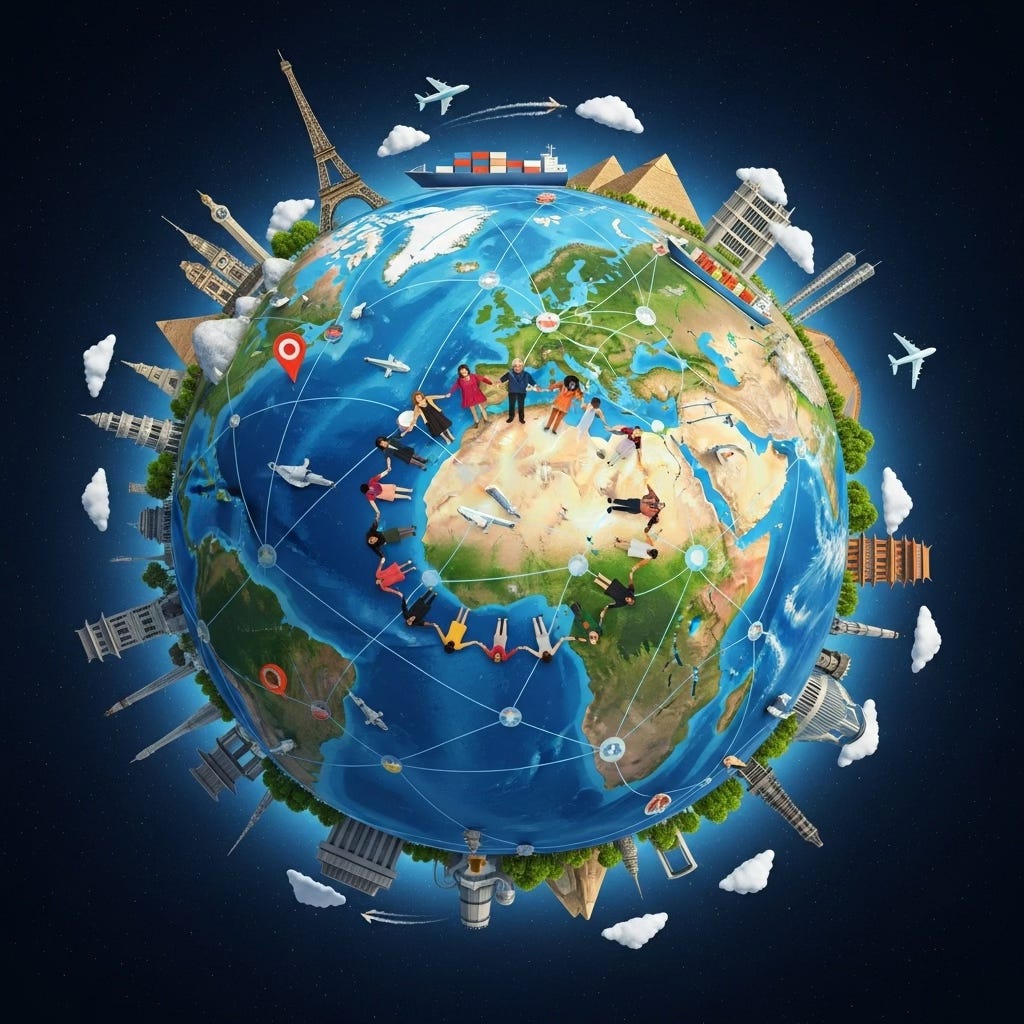
Global Tolerance Was the Air We Breathed
We were raised on Reading Rainbow and Nelson Mandela’s freedom. We were taught that differences were to be celebrated, that the world was a “global village,” that we were international citizens first and Americans second. I carried that identity with me when I worked in Europe, when I built my clinic across two continents, when I believed that borders were becoming less relevant.
That promise now feels like a cruel joke.
The World As It Is (And It’s Suffocating)
Look at your phone. Go ahead. Look at it.
It is burning hot in your hand, isn’t it? It is delivering you a constant intravenous drip of horror. Ukraine—a war I can feel in my bones because I have walked those streets, because I know that geography now—has turned into a meat grinder that makes the Cold War look polite. Hamas has unleashed a suffering that my grandfather would recognize from 1944. Sudan, Myanmar, the humming threat of Taiwan. The world is not at peace. It is a kaleidoscope of fire, and we are watching it in HD while we eat breakfast.
But it’s not just the wars. It’s the return.
Nationalism has come back like a fever we thought we’d vaccinated against. Brexit. Orbán. Modi. And here, in these United States, the “America First” rhetoric feels like a wall closing in, not just on the border, but on the mind. The “us versus them” that Sesame Street tried to kill is now the operating system of our politics. A recent Pew study found that 70% of people in major economies believe globalization has hurt them. The international citizen I was raised to be now feels like a refugee in my own country.
And the technology—oh, the technology. It was supposed to connect us. Instead, it has perfected isolation. I see it far too often: teenagers who have never touched another human being without a screen intermediary; women tracked by abusers through apps that were marketed as safety features; middle-aged men who lost their manufacturing jobs to algorithms and lost their identities with them. The Surgeon General warned us in 2023 that social media is driving a youth mental health crisis. Hinton, the godfather of AI, quit Google to warn us that we are building our own obsolescence, or worse, our own destruction.
We are drowning in information and starving for connection.
The hopelessness is real. It is valid. It is the appropriate response to looking at the ledger of broken promises.
But it is not the final word.
The World We Are Still Building (Yes, Us)
I am going to tell you something that sounds impossible, but I need you to hear it because I have seen it with my own eyes, in the trenches of human suffering:
We are maturing.
Not aging—maturing. Like the desert after a monsoon, when the dry washes suddenly bloom with flowers that have been waiting years for water. Like the Midwestern soil that freezes solid for months but breaks open in spring.
The 1980s gave us a vision of America that was shiny, consumption-driven, and individualistic. It was a beautiful dream, but it was a child’s dream. We are not children anymore. We are forty-something, and we have buried friends and lost homes and watched towers fall, and we are still here. That survival has given us something the 1980s never could: depth.
Worldwide Peace Begins in the Dust
I cannot stop the missiles in Ukraine. You cannot. But I can tell you about the veteran I know—a man who saw things in Fallujah that broke him—who now volunteers with refugee resettlement in Tucson. He recently told me, “I went over there to fight enemies. I came back and realized I had to learn how to love them.“
Peace is not a treaty. It is a practice. In Arizona, we have a concept: desert hospitality. You do not pass a broken-down car in 115-degree heat. You stop. You give water. You get your hands dirty. That is how we survive here. That is how we survive everywhere.
Reject the dehumanization. When you see the algorithm feeding you rage, starve it. When you see your neighbor—especially the one with the yard sign you hate—see the fear behind their anger. I have worked in six countries, and I am telling you: pain has no passport. A mother in Milwaukee grieving her son lost to overdose is the same species of grief as a mother in Israel who’s child was murdered on October 7th. Recognize that sameness. It is revolutionary.
Healthcare and Education Are the New Infrastructure
The 1980s told us to build malls. We need to build care.
In my work, I have learned that you cannot reach a person who is in survival mode. The domestic violence survivor cannot think about “world peace“ when she is figuring out how to hide bruises. The uninsured diabetic cannot think about civic duty when he is rationing insulin. We must create the conditions for humanity to flourish.
Look to Europe, where I once lived and worked—healthcare is not a luxury but a floor beneath which no one falls. Look to Costa Rica, which abolished its military and invested in teachers. Look to Cure Violence in Chicago, treating gunshot wounds like a contagious disease and reducing shootings by 73%. This is not socialism or capitalism. This is survival infrastructure.
And education—real education, not just test prep—is the antidote to the fear that is eating us. Mentor a kid. Read to a child who is not yours. The 1980s legacy of “rugged individualism” is dead; it died around 2008. The new legacy is interdependence.
Choosing Love is the Only Rebellion Left
I know. I know how that sounds. In a world of drone strikes and AI-generated hate, love sounds like weakness.
It is not. It is the hardest thing there is.
Daryl Davis didn’t defeat the Klan with legislation. He did it with barbecues and conversations, sitting with men who wanted to kill him until they couldn’t see him as “other” anymore. The Amish of Nickel Mines didn’t forgive because it was easy; they forgave because it was the only way to break the cycle of violence.
Love is not sentiment. It is labor. It is the choice to de-escalate when every neuron in your body wants to rage-tweet. It is the choice to look at the person who believes the opposite of you and ask, “What are you afraid of?“ instead of “How can I win?“
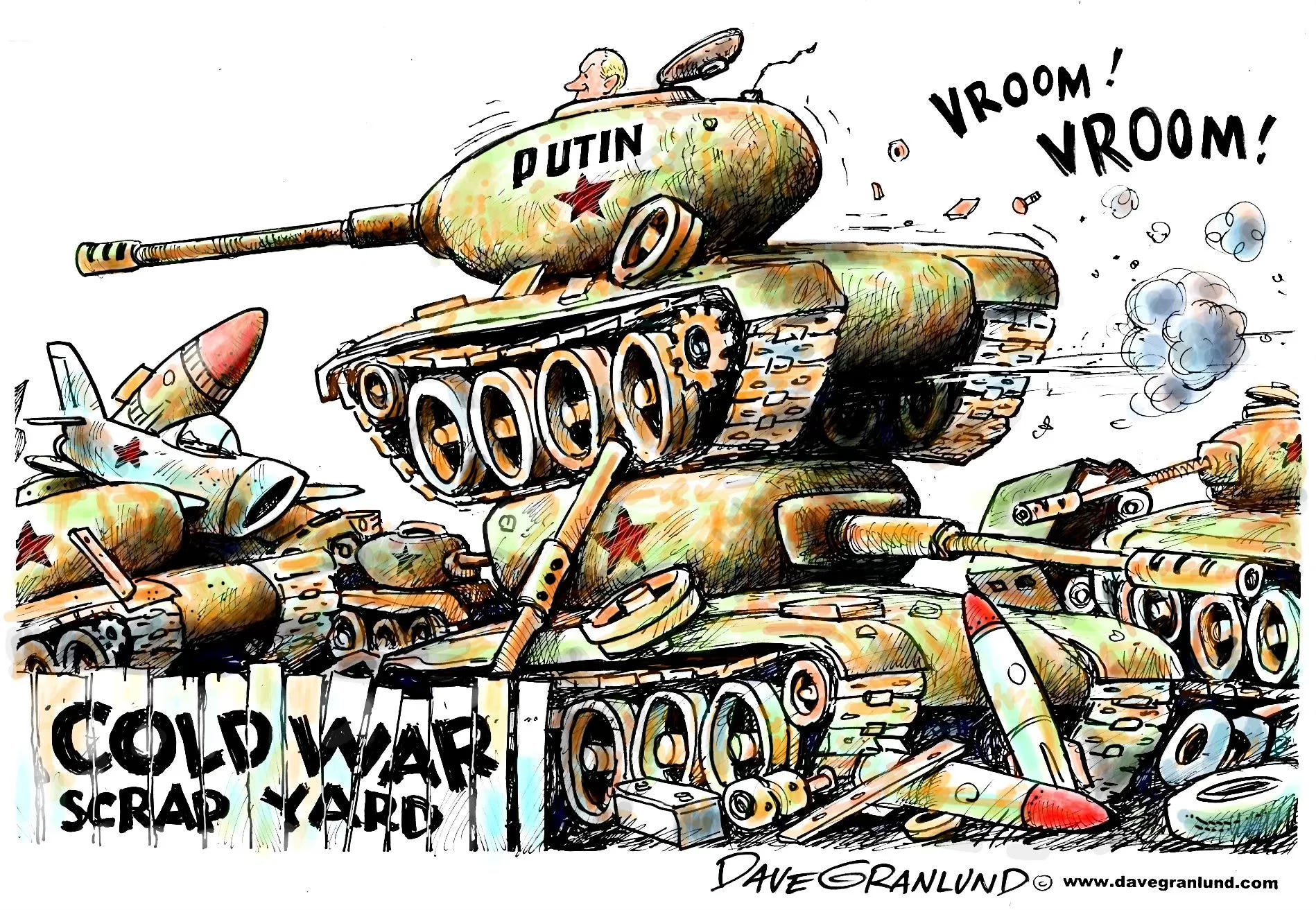
I have spent several years studying violence. I know its patterns. And I am telling you: love is the only pattern that breaks the chain.
Conclusion: Three Generations, One Desert Bloom
I am forty-two. I stand at my window in Arizona and watch the sun set behind the saguaros—those giants that survive decades of drought by storing what they need, by waiting, by enduring.
In my lifetime, I have seen the towers fall. I have seen George Floyd die on a Minneapolis street while the world watched on screens. I have seen antisemitism rise from the grave like a zombie, and I have seen Jewish friends remove their Stars of David for safety. I have seen hope look like it was dying.
My mother, sixty-two, was born in the awe of Armstrong’s iconic step onto the moon—a moment of pure, unadulterated us. She lived through the Kennedy assassination. She saw The Vietnam Report on the evening news every night for ten years.
My grandfather, passed a few years ago at ninety-three, saw the Depression turn men into ghosts. He saw Buchenwald liberated. He saw Korea freeze his friends.
Three lifetimes. Three accumulations of horror.
And here is what my grandfather, the bravest man I knew, taught me long before the end, “Don’t you dare be afraid. Fear is the only thing that can actually kill you.”
He survived the Depression and the Korean War still believing the morning would come.
My mother survived the death of heroes and still raised me to reach for the stars.
I have survived the betrayal of the 1980s dream, and I am telling you: we are not the generation that failed. We are the generation that is waking up.
The 1980s gave us a plastic dream—shiny, disposable, individualistic. We are trading it in for something harder, older, deeper. We are trading it in for the wisdom of the desert: that survival depends on community, on storing resources for others, on blooming when the rain finally comes.
The world we wanted—the one where every kid is safe, where healthcare is a right, where borders are bridges—that world is not behind us. It is not dead. It is in utero. And we are the midwives.
We are battered. We are disappointed. We are middle-aged in a world that feels like it’s ending.
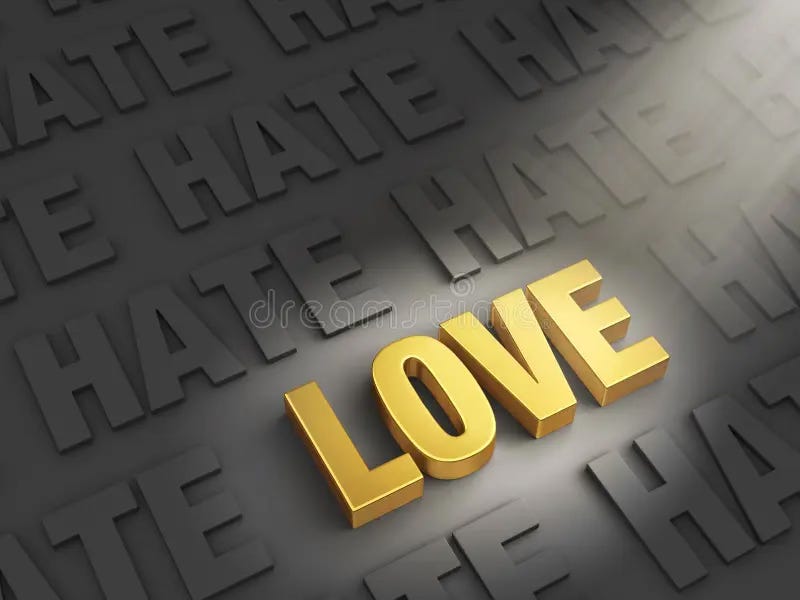
But we are not finished.
Look at the monsoon clouds gathering over the mountains. Look at the way the desert waits, patient and fierce. Look at your hands—still strong, still capable of holding another human being.
The 1980s are over. The dream is not.
Choose it. Build it. Bloom.
We are still here.
The saguaro doesn’t bloom alone. It needs the rain, the roots beside it, the shared aquifer beneath the dust. So do we. If these words moved something in you, pass them on. Subscribe. And tomorrow morning, step outside before you check your phone—look at the sky, take one breath that belongs only to you, and remember: we are not finished. Now let’s get to work.
©The Liefde Organization; 02-March-2026 (Barbara Jo Ladd, PsyD) All Rights Reserved.